Encounter magnificent sea turtles, graceful reef sharks, and incredible marine biodiversity in the pristine waters surrounding Gili Trawangan, Indonesia.
Experience world-class encounters with sea turtles, sharks, and diverse marine species in one of Southeast Asia's most pristine diving destinations
The waters surrounding Gili Trawangan offer some of the most consistent and spectacular marine wildlife encounters in all of Indonesia. When divers speak of turtle diving gili trawangan, they're describing an experience that transcends typical wildlife diving — here, encountering green sea turtles isn't a matter of luck but an expected highlight of virtually every dive. The healthy turtle populations thriving in these protected waters have made the Gili Islands internationally renowned among divers seeking guaranteed marine megafauna encounters in comfortable, accessible conditions.
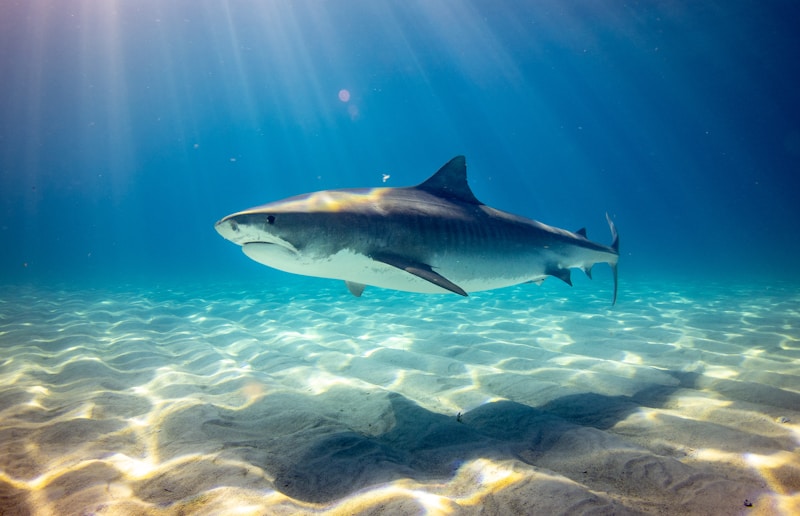
Beyond turtles, the shark diving gili islands experience introduces divers to graceful reef sharks, harmless to humans yet magnificent to observe in their natural hunting grounds. White-tip and black-tip reef sharks patrol the deeper walls and channels, their sleek forms perfectly adapted to life on the reef. Bamboo sharks rest in sandy patches, camouflaged against the seafloor. The presence of healthy shark populations indicates the overall health of the marine ecosystem, reflecting successful conservation efforts and the abundance of prey species supporting these apex predators.
The exceptional marine biodiversity surrounding the Gili Islands results from a unique combination of factors. The islands sit at the convergence of oceanic currents that deliver nutrient-rich waters, supporting abundant plankton blooms that form the foundation of the marine food chain. Protected marine areas established through community conservation initiatives have allowed fish populations to recover and thrive, attracting larger predators and creating the balanced ecosystems necessary for biodiversity. The absence of large-scale commercial fishing pressure, combined with active reef restoration projects, has enabled coral systems to flourish, providing habitat for the countless species that make these waters so extraordinary.
Water temperatures remaining warm year-round (27-29°C/80-84°F) support tropical species diversity impossible in cooler waters. The varied topography — from shallow coral gardens to dramatic walls dropping into deep water — creates microhabitats suitable for different species with varying environmental preferences. Sandy patches between coral heads provide feeding grounds for rays, sandy-bottom specialists, and camouflaged predators. Coral bommies rising from sand create cleaning stations where larger species like turtles and sharks visit to have parasites removed by specialized cleaner fish and shrimp.
🐢 Conservation Success Story — The Gili Islands' turtle populations represent a remarkable conservation achievement. Once threatened by egg collection and habitat destruction, green and hawksbill turtle numbers have rebounded dramatically thanks to protection efforts, nesting site conservation, and community commitment to marine stewardship.
The commitment to marine conservation extends throughout the local community, with dive operators, accommodation providers, and residents all invested in protecting the underwater environment that sustains the local economy. Regular beach cleanups remove plastic and debris before it enters the ocean. Mooring buoys at popular dive sites prevent anchor damage to coral. Educational programs teach visitors about responsible diving practices and marine life interactions. This community-wide dedication to ocean health ensures that the marine biodiversity you encounter today will remain for future generations to experience.
Our decades of diving these waters have developed intimate knowledge of where and when specific species appear, what behaviors to expect, and how to position divers for optimal encounters while minimizing disturbance to marine life. Our dive guides know which cleaning stations turtles frequent, the time of day sharks are most active, the seasonal patterns of pelagic visitors, and the subtle environmental cues indicating when special encounters might occur. This expertise, combined with our commitment to responsible wildlife diving practices, ensures you enjoy spectacular encounters while contributing to the conservation of the species you're privileged to observe.
Every marine life dive includes thorough briefings covering proper interaction protocols, photography guidelines that prioritize animal welfare over perfect shots, and explanations of the ecological relationships you'll witness underwater. Understanding what you're seeing — why turtles visit cleaning stations, how sharks hunt, what symbiotic relationships exist between species — transforms encounters from simple sightings into profound appreciation of complex marine ecosystems. For those seeking even more extraordinary underwater adventures, start your diving journey with foundational training that opens access to all these incredible marine experiences.
The magnificent creatures you'll encounter in Gili Trawangan's crystal-clear waters
Encounter these magnificent reptiles on virtually every dive, often seeing multiple individuals grazing on seagrass or resting at cleaning stations.
White-tip and black-tip reef sharks patrol the deeper areas, completely harmless to divers but spectacular to observe.
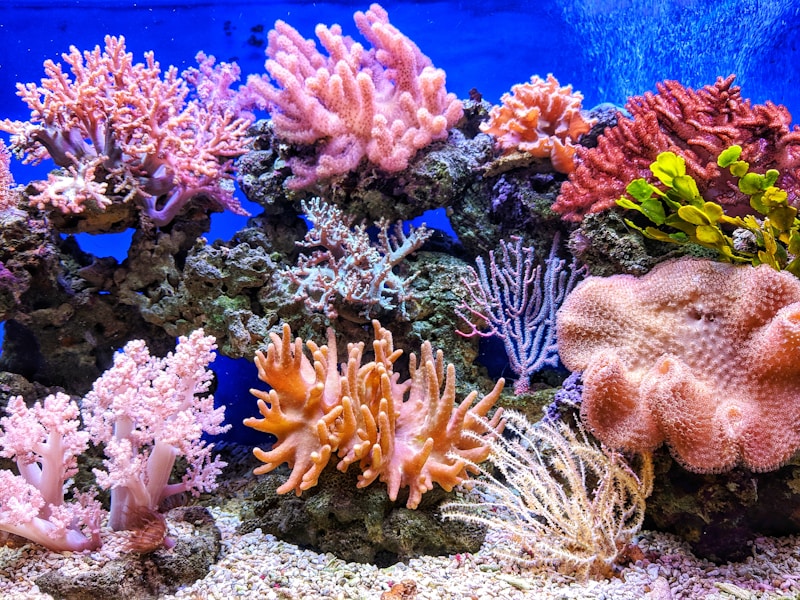
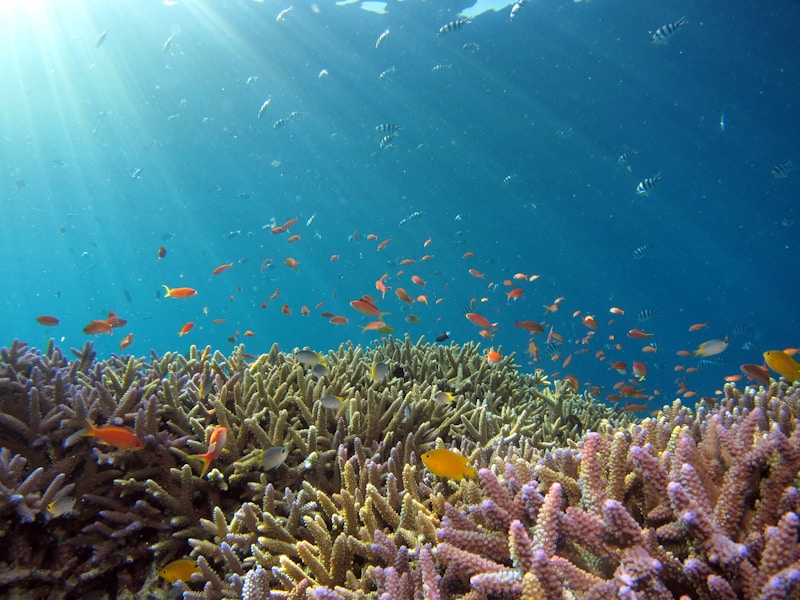
Countless species of colorful reef fish create living kaleidoscopes of color and movement on every dive.
The incredible variety of marine life calling Gili Trawangan home
Green and hawksbill turtles in healthy populations, often multiple per dive
White-tip, black-tip, and bamboo sharks patrolling the reefs and channels
Masters of camouflage hunting at dusk and hiding in reef crevices
Changing colors and patterns, displaying remarkable intelligence
Various puffer species grazing on coral and investigating divers curiously
Spiny lobsters hiding in overhangs and emerging to hunt at night
Everything you need to know about diving with the magnificent sea turtles of Gili Trawangan
Sea turtles represent one of the ocean's most beloved and charismatic megafauna species, and the Gili Islands offer some of the world's most reliable turtle encounters. These ancient reptiles, whose ancestors swam alongside dinosaurs 110 million years ago, maintain populations in these waters that astound marine biologists and delight divers. On typical dives around Gili Trawangan, encountering 5-10 individual turtles isn't unusual, with some dives producing 20+ sightings as you move through areas where turtles congregate to feed, rest, and interact with cleaning organisms.
The green sea turtle constitutes the most commonly encountered turtle species around the Gili Islands, with a resident population that marine researchers estimate in the hundreds. These magnificent reptiles can reach 1.5 meters in length and weigh over 150 kilograms at full maturity, though most individuals divers encounter measure 60-100 centimeters. Despite their name, green sea turtles aren't always green — their coloration ranges from olive to brown to nearly black, with the "green" name actually referring to the greenish color of their fat, a result of their herbivorous diet of seagrass and algae.
Green turtles display remarkable site fidelity, with individual animals returning to the same feeding areas, resting spots, and cleaning stations repeatedly. Experienced dive guides recognize specific individuals by unique shell patterns, facial markings, and behavioral quirks, sometimes encountering the same turtles over periods of years. This familiarity allows guides to predict where specific individuals might be found and understand their comfort levels around divers, ensuring encounters that respect the animals' space while still providing incredible photographic and observational opportunities.
While less common than greens, hawksbill turtles also inhabit the waters around Gili Trawangan, particularly in areas with healthy hard coral growth. Hawksbills are distinguished by their narrow, pointed beaks (resembling a hawk's bill, hence the name), more colorful shell patterns featuring amber, brown, and gold tortoiseshell markings, and their preference for coral reef habitats where they feed on sponges. These critically endangered turtles were historically hunted nearly to extinction for their beautiful shells used in jewelry and decorative items, making every encounter with wild hawksbills a privileged experience.
Hawksbills tend to be slightly smaller than greens and often more skittish around divers, requiring greater patience and subtlety to observe without causing disturbance. Their specialized diet of sponges plays an important ecological role in reef health, controlling sponge populations that might otherwise overgrow and damage coral. Watching a hawksbill use its pointed beak to extract sponges from crevices demonstrates remarkable feeding adaptation and provides insight into the complex ecological relationships maintaining healthy reef systems.
Sea turtles are reptiles, meaning they breathe air and must surface regularly despite spending virtually their entire lives in the ocean. Turtles can hold their breath for extended periods — 45 minutes to several hours when resting, though actively swimming turtles typically surface every 5-15 minutes. Observing a turtle's graceful ascent to the surface, the gentle exhalation and quick inhalation at the water's surface, and the equally elegant descent back to depth never loses its magic regardless of how many times you've witnessed it.
Female turtles return to nest on the same beaches where they themselves hatched, sometimes traveling thousands of kilometers from feeding grounds to nesting sites. The Gili Islands serve primarily as feeding and developmental habitat rather than major nesting grounds, though occasional nesting does occur. The turtles you encounter while diving are likely juveniles and sub-adults using the rich feeding grounds to grow and mature before eventually making their own epic migrations to breeding areas and nesting beaches elsewhere in Indonesia and beyond.
Despite their abundance around the Gili Islands today, sea turtles face serious threats throughout their range. Plastic pollution causes deaths when turtles mistake bags for jellyfish and consume them. Fishing gear entanglement drowns turtles unable to surface for air. Coastal development destroys nesting beaches. Climate change affects sand temperatures, which determine hatchling sex ratios. The healthy turtle populations divers enjoy around Gili Trawangan exist because of active conservation efforts including nesting beach protection, anti-poaching patrols, fishing gear modifications, plastic reduction initiatives, and the economic value diving tourism places on living turtles versus dead ones.
By choosing to dive with responsible operators committed to marine conservation, you directly support the protection of these magnificent creatures. The revenue generated by diving tourism provides economic incentive for communities to protect turtles rather than harvest them. Your presence as a diver observing turtles in the wild demonstrates their value alive, swimming free, rather than as soup, shells, or eggs. Every encounter you enjoy represents a conservation success story worth celebrating and supporting.
Where to find the highest concentrations of sea turtles around Gili Trawangan
Aptly named site with virtually guaranteed multiple turtle sightings, shallow enough for all certification levels.
Dramatic wall dive between Gili Meno and Gili Air where turtles cruise the currents and rest in overhangs.
Shallow shipwreck providing habitat for turtles alongside diverse fish populations and healthy coral growth.
Extensive seagrass beds where green turtles feed, often allowing very close approach while they graze.
While famous for sharks, also features regular turtle sightings and vibrant coral formations.
Cleaning station where turtles visit to have parasites removed, offering extended observation opportunities.
Meeting the graceful predators of Gili Islands' underwater realm
Shark encounters evoke strong reactions — for some divers, the ultimate thrill representing everything exciting about diving, while others approach with trepidation based on media-driven misconceptions about shark behavior. The reality of shark diving in the Gili Islands falls firmly in the "thrilling but safe" category, with the species present posing zero threat to divers while providing spectacular opportunities to observe these magnificent predators in their natural environment. Understanding shark behavior, ecology, and the important role they play in healthy marine ecosystems transforms encounters from fearful moments into profound appreciation of evolution's masterpiece predators.
White-tip reef sharks constitute the most commonly encountered shark species around the Gili Islands, identifiable by the distinctive white markings on the tips of their dorsal and tail fins. These relatively small sharks typically measure 1-1.6 meters in length, with slender bodies perfectly adapted to maneuvering through the complex three-dimensional structure of coral reefs. Unlike many shark species that must swim continuously to breathe, white-tips can pump water over their gills while stationary, allowing them to rest during daylight hours in caves, under overhangs, or in coral crevices.
Observing white-tip reef sharks provides insight into their role as nocturnal hunters. During daytime dives, you'll often encounter them resting, sometimes in small groups sharing favorite resting spots. Their relaxed demeanor while resting allows for close observation and photography, though respectful distance should always be maintained. As dusk approaches, white-tips become more active, beginning their nightly patrols hunting for sleeping fish, octopus, crustaceans, and other reef inhabitants. Night dives offer completely different shark behaviors, with white-tips actively hunting, their sensory systems perfectly adapted to detecting prey in darkness.
Black-tip reef sharks, marked by prominent black tips on all fins, frequent shallower areas including the reef flats and lagoons. These sharks demonstrate more active swimming patterns than white-tips, constantly cruising their territories in search of prey. Black-tips are particularly spectacular to observe when hunting, displaying bursts of speed and agility as they pursue small fish through shallow water. Their tendency to hunt in the shallows sometimes brings their dorsal fins above the surface, the classic "shark fin cutting through water" image that captures public imagination.
Despite their more active nature and association with shallow water (where humans swim and snorkel), black-tip reef sharks pose no threat to people. They feed on small fish far too small to consider humans as prey, and their instinct when encountering something as large as a diver is to maintain distance or depart the area. The key to enjoying black-tip encounters involves moving slowly, maintaining neutral buoyancy to avoid appearing as a threat, and allowing the sharks to determine comfortable approach distances rather than chasing them for closer looks or photographs.
Bamboo sharks represent a completely different shark family (Hemiscylliidae) with entirely different behaviors and hunting strategies compared to the more familiar requiem sharks (white-tips and black-tips). These bottom-dwelling sharks spend daylight hours resting on sandy patches between coral heads, perfectly camouflaged against the seafloor through mottled brown patterns. Their small size (typically under 1 meter) and sedentary nature during day mean many divers swim directly over bamboo sharks without noticing them, only spotting these cryptic predators when guides point them out.
Bamboo sharks possess remarkable adaptations for their lifestyle, including the ability to "walk" across the seafloor using muscular pectoral fins. Their diet consists of bottom-dwelling invertebrates and small fish that they hunt primarily at night using well-developed sensory systems detecting electrical fields and chemical traces. Observing a bamboo shark resting on the sand provides excellent opportunities for macro photography and appreciation of the incredible diversity within the broader "shark" category — these small, harmless, bottom-dwellers share remarkably little with the fast-swimming, midwater predators most people envision when thinking "shark."
🦈 Shark Safety Facts — The reef sharks found around Gili Trawangan have never attacked a diver. These species feed on small fish and invertebrates, with humans far too large to register as prey. Millions of shark dives occur globally each year with virtually zero incidents involving these species.
Sharks play crucial roles as apex predators in marine ecosystems, with their presence indicating overall ecosystem health. By controlling populations of mid-level predators and removing sick or weak prey animals, sharks maintain the balance necessary for biodiversity. Reef systems with healthy shark populations demonstrate greater resilience to environmental stresses compared to reefs where sharks have been removed through overfishing. The presence of white-tips, black-tips, and other shark species around the Gili Islands reflects the effectiveness of marine protection efforts and the value the local community places on maintaining healthy ocean ecosystems.
Globally, shark populations face severe threats from overfishing, particularly for shark fin soup trade, bycatch in other fisheries, and habitat destruction. Some shark species have declined by over 90% in recent decades, with several now facing extinction risks. The sharks you encounter while diving in the Gili Islands represent conservation successes worth celebrating — protected populations thriving in marine sanctuaries thanks to communities recognizing their ecological and economic value alive versus dead. Every shark encounter you enjoy supports conservation by demonstrating the tourism value of healthy shark populations.
Blue Marlin Dive actively supports marine conservation through multiple initiatives protecting the ocean environments and species you enjoy while diving:
Beyond turtles and sharks — exploring the full spectrum of marine biodiversity
While turtles and sharks rightfully capture attention as marine megafauna, the complete underwater experience around Gili Trawangan encompasses far more than these charismatic species. Every dive reveals layers of biodiversity from microscopic plankton through schooling fish to apex predators, all interconnected through complex ecological relationships that have evolved over millions of years. Understanding and appreciating this biodiversity transforms diving from simple wildlife viewing into genuine ecological education, revealing the intricate connections maintaining healthy ocean systems.
The foundation of all biodiversity around the Gili Islands begins with the coral reefs themselves — living structures built by countless individual coral polyps depositing calcium carbonate skeletons generation after generation. These reefs provide the three-dimensional structure creating habitat complexity supporting thousands of species. Hard corals of dozens of species create the permanent framework, while soft corals, sea fans, and sponges add additional structure and diversity. The coral communities around Gili Trawangan have rebounded remarkably from historical damage, demonstrating the resilience of properly protected reef systems.
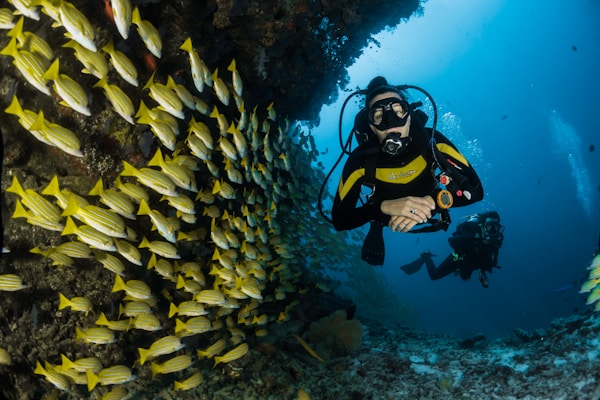
Hundreds of tropical reef fish species inhabit the waters around Gili Trawangan, from tiny gobies and blennies hiding in coral crevices through massive groupers lurking under overhangs. Schools of fusiliers create living clouds above the reef, their synchronized movements mesmerizing to observe. Angelfish and butterflyfish display spectacular coloration while feeding on coral polyps, sponges, and algae. Parrotfish use powerful beaks to scrape algae from coral, grinding up coral skeleton in the process and excreting it as sand — the beautiful white sand beaches surrounding the Gili Islands are literally parrotfish poop accumulated over thousands of years.
Predatory fish including groupers, snappers, trevally, and barracuda hunt the reef fish populations, creating the predator-prey dynamics essential for ecosystem balance. Observing hunting behaviors — a grouper stalking prey, a school of trevally coordinating to surround baitfish, barracuda hanging motionless before striking — provides insight into the strategies evolution has refined for underwater predation. Cleaner fish stations where larger species visit to have parasites removed demonstrate remarkable interspecies cooperation, with cleaners receiving meals while their "clients" gain health benefits from parasite removal.
Beyond vertebrate fish, the incredible diversity of invertebrate species provides endless fascination for observant divers. Nudibranchs (sea slugs) display colors and patterns so vibrant they seem artificial, with hundreds of species present in the Gili Islands waters alone. Crustaceans including colorful mantis shrimp, camouflaged decorator crabs, and cleaner shrimp all play specific ecological roles. Octopus and cuttlefish demonstrate remarkable intelligence and communication through rapid color and texture changes. Giant clams nestle in coral displaying iridescent mantles containing symbiotic algae. Christmas tree worms retract instantly into coral heads when sensing movement, then slowly re-emerge in spectacular spirals.
The invertebrate diversity extends into species most divers never notice without guidance — tiny commensal shrimp living among coral branches, cryptic crabs camouflaged perfectly against their backgrounds, flatworms gliding across coral surfaces. Macro photography enthusiasts can spend entire dives exploring single coral heads, discovering new species with every careful examination. Night dives reveal completely different invertebrate communities as nocturnal species emerge and daytime species retreat into hiding.
Capturing the incredible biodiversity of Gili Trawangan's underwater world
Ready to experience incredible turtle and shark encounters? Let's plan your underwater adventure
Blue Marlin Dive
Main Beach Road
Gili Trawangan, Indonesia
Daily: 10:00 AM - 10:00 PM
Dive trips: 8:00 AM & 2:00 PM